
"coffee altitude limits"
3000 article(s) found

Costa Rican coffee growing environment
This kind of coffee can grow above 1500 meters above sea level. Altitude has always been a problem for coffee growers. The higher the altitude, the better the coffee beans, not only because the higher altitude can increase the acidity of the coffee beans and thus increase the flavor, but also because the night temperature at the higher altitude is lower, which can make the trees grow slowly, thus making the coffee beans have a stronger flavor. In addition, due to the high

A brief introduction to the planting market price of Costa Rican boutique coffee beans with unique flavor
Coffee consumed in China (dyed blue or not dyed) accounts for about 10% of the total output. Local per capita coffee consumption is twice that of Italy or the United States. Other kinds of Brazilian coffee, such as Rio and Parana, can be produced in large quantities because they do not require too much care. Although the taste is rough, it is a kind of good and cheap coffee, because it is distributed all over the country and has solid quality.

A brief introduction to the description of the flavor, taste and aroma characteristics of Costa Rican boutique coffee beans
In 2002 and 2003, Colombia produced 3 million packets of coffee (60 kg each) and exported 1.87 million packets of coffee. 40% of the exported coffee is high-quality refined coffee, which is known internationally as GOURMET coffee. In the international market, refined coffee costs an average of US $93.61 per bag (46kg) (FOB), which is US $19.56 higher than that of ordinary coffee. I also have a kind of refined coffee, each bag.

Learn about the origin of Kenyan coffee beans what's so special about the flavor of Kenyan coffee beans?
Professional coffee knowledge exchange more coffee bean information please follow coffee workshop (Wechat official account cafe_style) Front Street Coffee-Kenyan Coffee History and Flavor introduction the history of growing coffee beans in Kenya is only one hundred years ago. In the 20th century, Kenya began to develop the coffee industry on a large scale under the leadership of British and German colonists. Today, Kenyan coffee production units

A brief introduction to the market price of high-quality Costa Rican coffee beans with strong acidity
Coffee consumed in China (dyed blue or not dyed) accounts for about 10% of the total output. Local per capita coffee consumption is twice that of Italy or the United States. Other kinds of Brazilian coffee, such as Rio and Parana, can be produced in large quantities because they do not require too much care. Although the taste is rough, it is a kind of good and cheap coffee, because it is distributed all over the country and has solid quality.
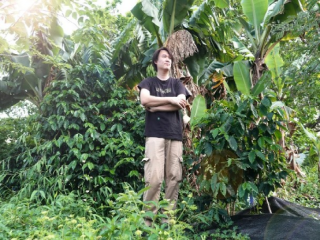
China Hong Kong can also produce fine coffee?! IT practitioners use expertise to grow kadura coffee
It is not easy for young people with limited wallet thickness to realize complete coffee freedom. Coffee roasting and brewing are handsome things in many people's eyes, but in the face of coffee planting, people imagine the scene facing the loess. Even so, in order to have a drink

Low-altitude coffee beans are softer. Are there many defective beans in low-altitude coffee?
Professional coffee knowledge exchange more coffee bean information Please pay attention to the coffee workshop (Wechat official account cafe_style) low-altitude areas have inherent restrictions, does not mean that there is no room to improve quality. We can use shade trees to reduce the temperature and sunshine intensity of the coffee park. Another trick is to strengthen nutrition management, which can also reduce summer.

A brief introduction to the flavor, taste and aroma characteristics of highly acidic Costa Rican boutique coffee beans
Coffee consumed in China (dyed blue or not dyed) accounts for about 10% of the total output. Local per capita coffee consumption is twice that of Italy or the United States. Other kinds of Brazilian coffee, such as Rio and Parana, can be produced in large quantities because they do not require too much care. Although the taste is rough, it is a kind of good and cheap coffee, because it is distributed all over the country and has solid quality.
A Brief Introduction to the Treatment Method of Grinding Degree and Roasting Degree of Costa Rican Fine Coffee Beans with Strong Acid
Coffee has changed the country, Costa Ricans say, and coffee has made an outstanding contribution to its rich environment.Although Costa Rica ranks third from the bottom in terms of land area in Central America, its economic environment is better than half of that of other countries.Because of its rich people and stable society, Costa Rica has more than 30 national parks. 1729

The Development of Costa Rican Coffee
High-quality Costa Rican coffee is called extra hard beans, and this kind of coffee can grow at an altitude of more than 1500 meters. Altitude has always been a problem for coffee growers. The higher the altitude, the better the coffee beans, not only because the higher altitude can increase the acidity of the coffee beans and thus increase the flavor, but also because the night temperature at the higher altitude is lower, which can make the trees grow slowly.

With chocolate color, complete grain shape, Yemeni coffee flavor, characteristics, taste and manor
Yemeni coffee originated from Arabian coffee trees hundreds of years ago, all of which are produced in areas above 3000 feet above sea level. For hundreds of years, the unique planting and production methods of Yemeni coffee have remained almost unchanged. The seedlings of Yemeni coffee trees are first cultivated in nurseries and then transplanted to high elevations. Pesticides and fertilizers are not used in the breeding process. Mature coffee beans are naturally dried on coffee trees and shelled by stone mill.

Costa Rican coffee Costa Rica Raminita Manor introduction.
For more information on coffee beans, please follow the Coffee Workshop (Wechat official account cafe_style) La Minita International Coffee Export Company, named after the flagship Hacienda La Minita estate in Tarazhu, Costa Rica. In addition to Costa Rica's flagship estate, Raminita also offers coffee from all over the world.

Information on Origin of Infinite Manor in Costa Rica Coffee flavor characteristics of Verasa treated with yellow honey
For the exchange of professional baristas, please follow the coffee workshop (Wechat official account cafe_style) Costa Rica Cafs Sin Limites Villa Sarch brief description 2017 unlimited manor yellow honey in Costa Rica to deal with the new arrival of Verasa! Caf Sin Lmites, we turn her into an infinite manor, which is easy to remember and she has also won the excellent Cup competition over the years! Since 2006

A brief introduction to the history and culture of the origin and development of Costa Rican boutique coffee beans
Second, vigorously develop high-quality coffee, increase the added value of coffee exports, and make up for the losses caused by the fall in coffee prices. Its main approach is to focus on the cultivation of high-quality coffee from 1000 meters to 1500 meters above sea level, prohibit the collection of immature coffee beans, strengthen the screening of coffee beans, and pay attention to the environmental protection ingredients during planting and processing. In 2002 and 2003, the output of coffee in Colombia was 3 million packets (60 per pack).

A brief introduction to the history and culture of the origin and development of Costa Rican boutique coffee beans with fruit flavor
Coffee was introduced into Costa Rica from Cuba in 1729. Today, its coffee industry is one of the well-organized industries in the world, with a yield of 1700 kg per hectare. Costa Rica has only 3.5 million people but 400m coffee trees, and coffee exports account for 25 per cent of the country's total exports. The volcanic soil of Costa Rica is very fertile and well drained, especially in the central part.

Yemeni mocha supreme Shirazi origin introduction of Yemeni mocha coffee hand brewing recommended parameters
For more information on coffee beans, please follow the coffee workshop (Wechat official account cafe_style). In fact, Yemen is located on the Arabian Peninsula of the Asian continent, but it is very close to Africa as long as it crosses the Red Sea and the Gulf of Aden Gulf of Aden. However, other Arab countries do not produce coffee, so people classify Yemeni coffee as North African coffee.

Costa Rican Coffee Origin Costa Rican Coffee characteristics
High-quality Costa Rican coffee is called extra hard beans, and this kind of coffee can grow at an altitude of more than 1500 meters. Altitude has always been a problem for coffee growers. The higher the altitude, the better the coffee beans, not only because the higher altitude can increase the acidity of the coffee beans and thus increase the flavor, but also because the night temperature at the higher altitude is lower, which can make the trees grow slowly.

Unique Grain shape complete Yemeni Coffee Variety characteristics introduction to Flavor Coffee beans in Manor
Yemeni coffee originated from Arabian coffee trees hundreds of years ago, all produced in areas above 3000 feet above sea level. For hundreds of years, the unique planting and production methods of Yemeni coffee have remained almost unchanged. The seedlings of Yemeni coffee trees are first cultivated in nurseries and then transplanted to high elevations. Pesticides and fertilizers are not used in the breeding process. Mature coffee beans are naturally dried on coffee trees and shelled by stone grinding.

Where is the origin of coffee?
The coffee producing area in Indonesia is mainly limited to Java, Sumatra and Sulawesi. The original species of Robusta accounts for 90% of its coffee production. A small amount of Arabica native coffee beans produced on the island of Java are sour coffee beans with small particles. The original species of Arabicam on this island was once a world-class product, but it was affected on a large scale in 1920.

The Panamanian boutique coffee beans Panama Manor of the King of Coffee
At first, the understanding of Panama was limited to a few words in high school geography textbooks. All I know is the Panama Canal, which is known as "the crossroads of the world" as a traffic passage connecting the Pacific Ocean and the Atlantic Ocean. Only after working in the coffee industry many years later did I know that Panama plays an important role in the coffee kingdom. Panama is a small city in the heart of the American continent.